SKZ Group serves with diverse knowledge within a broad eco-system, businesses, and individuals worldwide, both in technologies and international trade.
Typically 8% to 15% of your sale price, though it can climb up to 45% for certain accessory categories. This rate has stayed frozen since January 2024 and remains unchanged through 2026, according to Amazon's official Selling Partners update.
FBA fulfillment fee
Covers pick, pack, and ship. In 2026, Amazon raised this by an average of $0.08 per unit — small, but it adds up across thousands of units.
Fuel and logistics surcharge
A new 3.5% surcharge added to US FBA fees starting April 17, 2026. Easy to miss, hard to ignore once your volume scales.
Storage fees
Charged monthly per cubic foot. They spike two to three times higher during Q4 (October to December).
Aged inventory surcharge
Kicks in at 181 days. In 2026, it gets steeper — $0.30/unit at 12–15 months and $0.35/unit past 15 months.
Inbound placement fees
$0.21 to $1.58 per unit, a cost many sellers still forget to log.
PPC spend, returns processing, and COGS (cost of goods sold)
The three variables that change per product and per season.
Miss even two of these, and your "profit margin" is fiction.
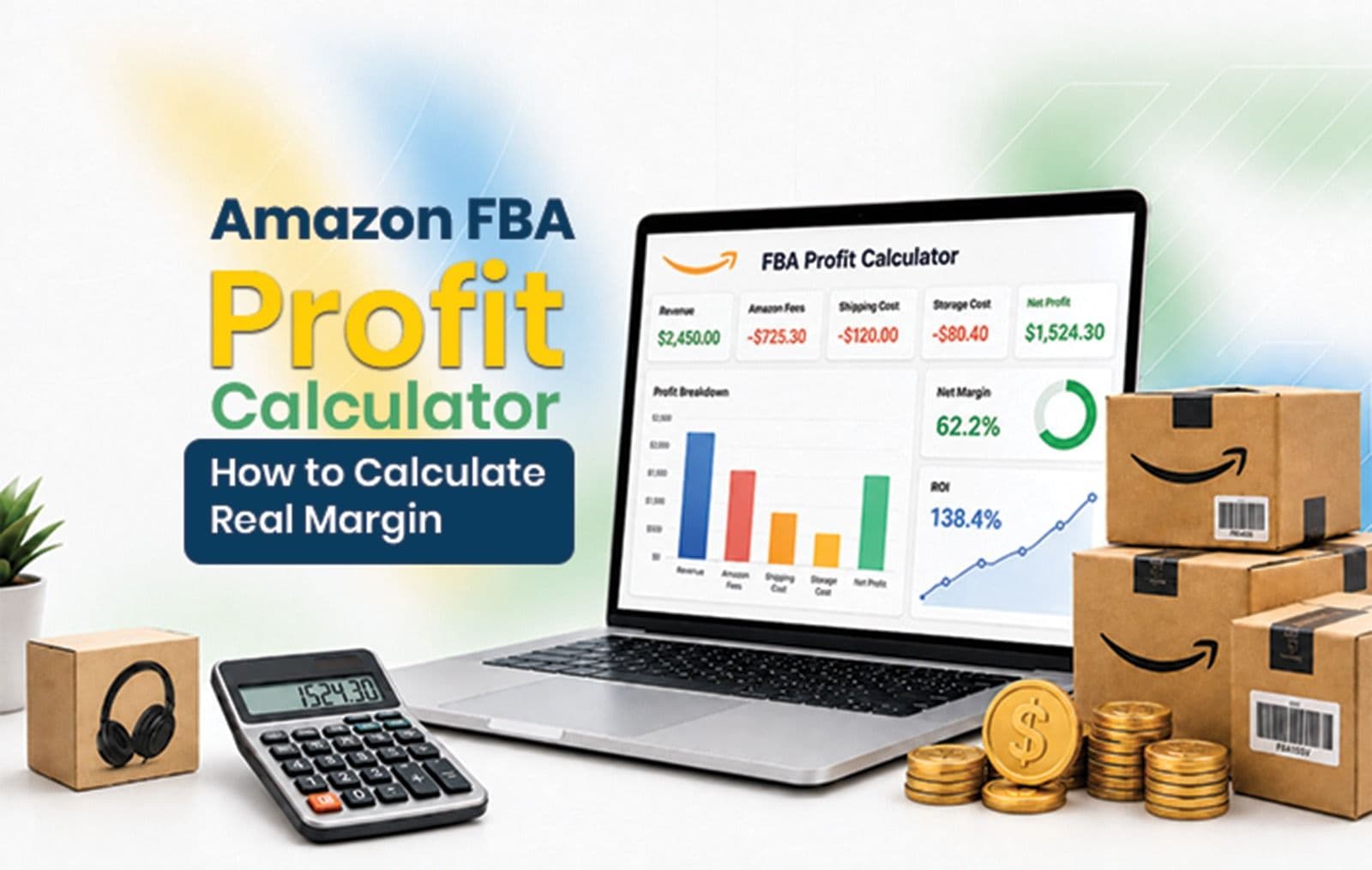
The Real Formula Behind Every Amazon FBA Profit Calculator
That second number is your real margin. Not your gross margin. Not your "before fees" number. This one.
What a "Good" Margin Actually Looks Like
Stop comparing yourself to influencers who quote 40% margins with zero context.
Realistically, most successful Amazon sellers run on 15% to 25% net profit margin. Below 10% is a warning sign. Above 30% is excellent, but rare, and usually temporary.
If your calculator shows 8%, that's not failure. That's data. Use it.
How to Actually Use the Amazon Revenue Calculator (Step by Step)
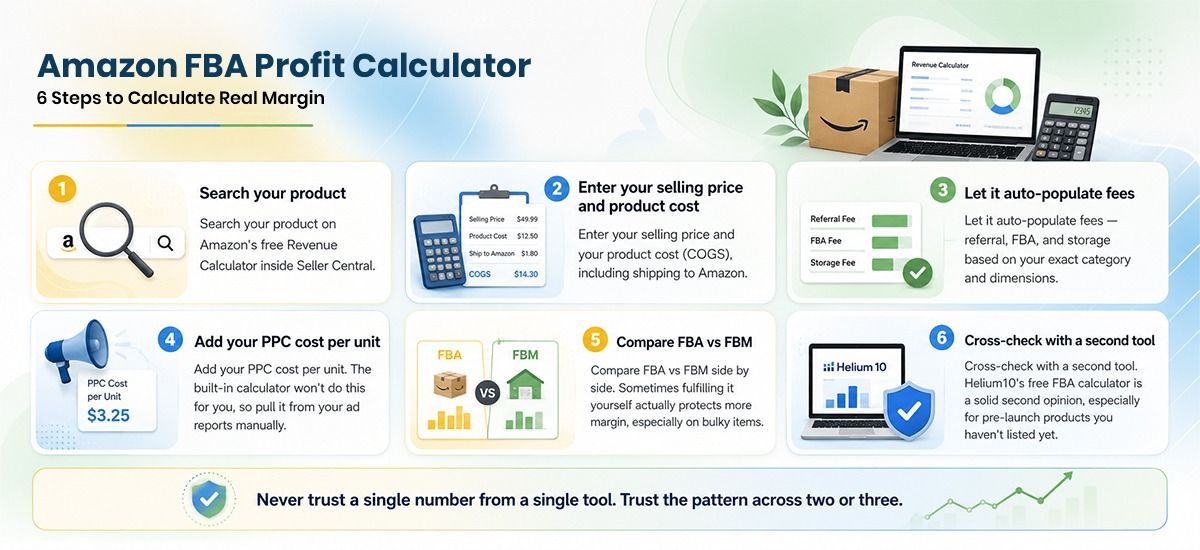
Search your product on Amazon's free Revenue Calculator inside Seller Central.
Enter your selling price and your product cost (COGS), including shipping to Amazon.
Let it auto-populate fees — referral, FBA, and storage based on your exact category and dimensions.
Add your PPC cost per unit. The built-in calculator won't do this for you, so pull it from your ad reports manually.
Compare FBA vs FBM side by side. Sometimes fulfilling it yourself actually protects more margin, especially on bulky items.
Cross-check with a second tool. Helium10's free FBA calculator is a solid second opinion, especially for pre-launch products you haven't listed yet.
Never trust a single number from a single tool. Trust the pattern across two or three.
Amazon FBA profit Calculator 6 steps
The Silent Margin Killers Nobody Warns You About
Return costs. Amazon deducts the original fee, then charges again for return processing: two hits, one refund.
Long-term storage. Inventory sitting past 271 days gets punished hard — the fee can reach $6.90 per cubic foot.
Category misclassification. Wrong category means wrong referral rate. This single mistake alone has cost sellers thousands without them noticing for months.
Seasonal fee spikes. Q4 fulfillment fees jump $0.20 to $1.00 per unit depending on size. Budget for it before Black Friday, not after.
Protecting Your Margin Like an Industry Veteran
Price with fees built in from day one, not as an afterthought.
Recalculate margin every quarter, not once at launch.
Track PPC as a real cost, not a "growth investment" you ignore in your profit math.
Audit your settlement report monthly. Buried fees hide there, not on your dashboard.
The Reality Check (And Why It's Still Worth It)
Here's my honest, 15-years-in take. Amazon FBA is not a passive income fantasy. Fees are rising, competition is sharper, and margins are tighter than they were five years ago.
But sellers who actually know their numbers — who run every product through an Amazon FBA profit calculator before they buy inventory — are the ones still standing, still scaling and still profitable.
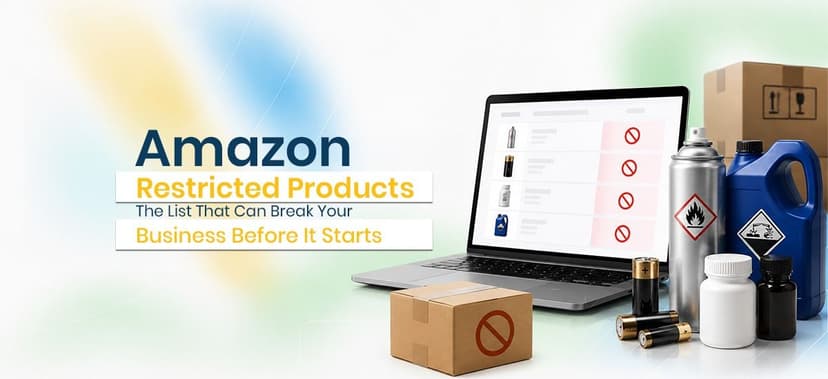
Knowing your real margin isn't the boring part of this business. It's the whole business.Before choosing a product to sell, make sure it complies with Amazon’s selling policies. Reviewing the Amazon restricted products list can help you avoid listing issues, account warnings, and unnecessary business risks.
The Questions Every Amazon Seller Is Secretly Googling
1. What is a good profit margin for Amazon FBA?
Most profitable sellers land between 15% and 25% net margin. Anything under 10% needs a pricing or sourcing fix.
2. Is the Amazon FBA profit calculator free to use?
Yes. Amazon's official Revenue Calculator inside Seller Central is completely free, and so is Helium10's version.
3. Why does my margin look different every month?
Storage fees, PPC spend, and seasonal surcharges shift monthly. Your "margin" is never a fixed number; it's a moving one.
4. Does the FBA calculator include advertising costs?
No. You have to add PPC spend manually. This is the most commonly forgotten cost in seller calculations.
5. What's the difference between gross margin and net margin?
Gross margin ignores operating costs like PPC and storage. Net margin includes everything. Net margin is your real number.
6. How often should I recalculate my Amazon profit margin?
Every quarter at minimum, and immediately after any Amazon fee update.
7. Why did my referral fee change without warning?
It usually didn't. It's more likely your product got recategorized, which changes the rate entirely.
8. Are 2026 Amazon fees higher than 2025?
Slightly. FBA fees rose an average of $0.08 per unit, plus a new 3.5% fuel surcharge from April 2026.
9. Can FBM ever be more profitable than FBA?
Yes, especially for bulky or heavy items where fulfillment fees are steep. Always compare both on your calculator.
10. What's the single biggest margin mistake new sellers make?
Pricing based on competitor prices instead of their own real cost breakdown. Copy their price, inherit their margin problem.