Website Redesign: 10 Signs Your Business Can't Ignore Now
Struggling with low conversions or high bounce rates? Discover 10 signs your website needs a redesign, redesign vs rebuild, and key benefits.

Your website is either winning trust for your business or quietly losing it.
Most owners don't notice the shift until traffic drops, leads dry up, or a customer says the site "feels a bit old."
By then, the cost of waiting has already added up.
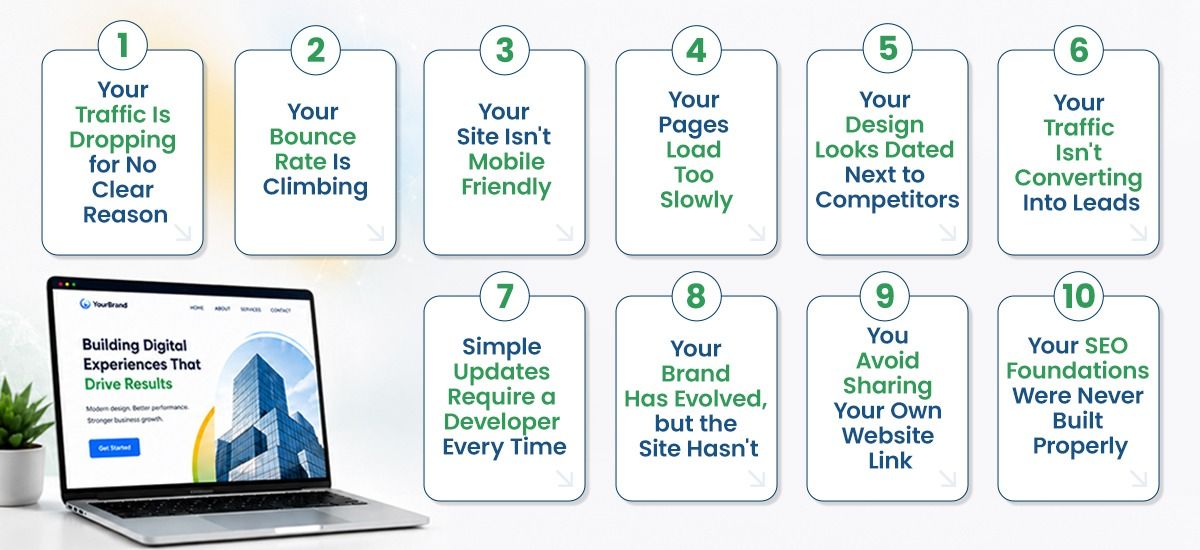
This guide covers what a redesign actually means, how it differs from a full rebuild, the ten clearest signs your site needs attention, and the real benefits of getting it right.
What Is Website Redesigning?
A website redesign is a focused update to how your site looks, feels, and guides visitors, without necessarily touching what it's built on.
Think of it as renovating a house: the foundation and plumbing stay the same, but the paint, layout, and flow all get an upgrade.
In practice, that means new visuals, refreshed navigation, updated content, and stronger calls to action, usually while keeping your existing content management system and backend infrastructure in place.
Because the technical core is untouched, a redesign is faster, lower-risk, and cheaper than starting from scratch.
It's the right move when your platform works fine, but the presentation, messaging, or experience doesn't reflect where your business is today.
What Is the Difference Between Rebuild and Redesign?
The two terms get used interchangeably, but they solve different problems.
Redesign improves what already exists. It reworks structure, UX, and visual design while keeping the parts of your current build that still work.
It retains and improves what is already working in the current technical build. URLs, core functionality, and your CMS generally stay put, which keeps disruption to your search rankings low.